

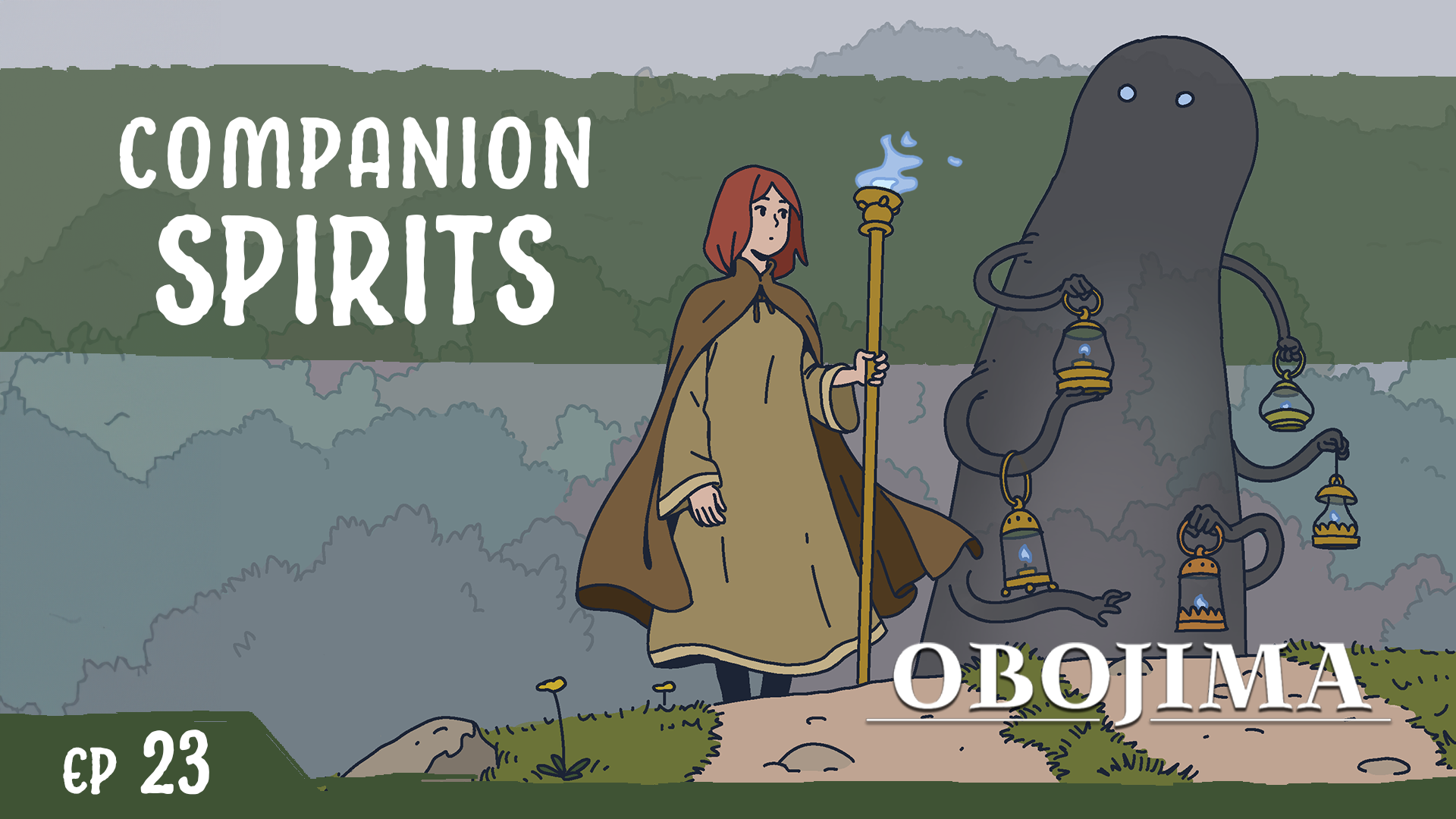
The Obojima Podcast the Blog | Episode 23 – Companion Spirits in Obojima
This blog post was made using dictation summary software and posted for SEO purposes. If you really want to know what this episode is about, check out the full episode here: https://youtu.be/W9tI0gJm3Vk?si=fqvoLnT3DPPtpNbT
Imagine Bruce Willis from The Sixth Sense popping into Obojima! Suddenly the vending machines mysteriously transform into doors with red knobs that refuse to open!
Copyright laws being what they are, this sadly won't take place in Obojima. But that's no reason to ignore Episode 23 of the Obojima Podcast. This podcast dives into the creative process of building Obojima: Tales from the Tall Grass. First things first, let’s meet our intrepid crew of writers.
-
Jeremiah Crofton - The Creative Director of 1985 Games and the creator of Obojima
-
Ari Levitch - Head Writer
-
Adam Lee - Head Writer
Jeremiah, Adam, and Ari explore the design and implementation of companion spirits in Obojima: Tales from the Tall Grass. Unlike traditional D&D familiars, companion spirits are autonomous, quirky, and full of narrative potential.
Introducing Companion Spirits
Obojima’s companion spirits break away from the Find Familiar mold, transforming magical sidekicks into independent pseudo-NPCs. Inspired by figures like Gigi from Kiki’s Delivery Service and Calcifer from Howl’s Moving Castle, these companions have their own wants, quirks, and even the ability to disagree with players. They’re not just tools—they’re characters who shape the story.
Familiars vs. Companions
Traditional familiars act as mechanical extensions of the player: obedient, expendable, and animal-like in intelligence. Companions in Obojima are different—they’re autonomous, can be conniving or charismatic, and often more powerful than familiars. They aren’t extensions of a character sheet but living, breathing elements of the world.
Companion Types
Companions come in many flavors, giving DMs and players creative freedom:
-
Animated Objects: Floating masks, handheld devices, or toys.
-
Aquatic Beasts: Crabs, eels, or other water-bound spirits.
-
Land and Flying Beasts: Familiar beasts, small dragons, or ethereal birds.
-
Elemental Spirits: Flame wisps, animated bubbles, clouds.
-
Spectral Spirits: Ghostly guides or floating apparitions.
-
Flora Spirits: Mushrooms, leaves, or plant-like companions.
Mechanics and Player Interaction
Instead of adding mechanical burden like familiars often do, companions act like NPCs under flexible DM control. A DM may let players roll for their actions (like stealth or jumping) while still guiding their larger goals and behavior. Companions scale lightly for balance, with variants for levels 1–5 and 5–10, but they’re not built for combat—they’re built for storytelling.
Companion Death and Regeneration
Death or incapacitation of a companion is left to DM discretion. Creative solutions abound: flora spirits might wilt and require care, parts of them can be replanted to regrow, or new companions can appear with vague memories or different personalities (e.g., an “evil twin” or child of the original). This flexibility ensures narrative continuity while keeping companions engaging and unpredictable.
Storytelling Power
Companion spirits shine in narrative play. They can act as personal NPCs, deliver quests, guide the party through tricky transitions, or tug on heartstrings with their adorable personalities. Their attachments to characters are temporary, often lasting a level or two before moving on—sometimes returning later with new quirks, altered dispositions, or even as a transformed version of themselves.
Traits, Tables, and Quirks
The Obojima book provides tables for desires, goals, dispositions, and quirks, making it easy to generate companions that feel unique. From mischievous floating masks to sleepy flora spirits, the variety is wide open for creative storytelling.
Companions as DM Tools
DMs can leverage companions to spark quests, deepen emotional engagement, and fill narrative lulls. They’re simpler than NPCs but still bring personality, making them an excellent bridge between mechanics and story.
Conclusion
Episode 23 highlights how Obojima reimagines sidekicks into story-driving forces. Companions are more than familiars in Obojima: they’re narrative engines, emotional anchors, and quirky characters with lives—or afterlives—of their own. Even if they're Bruce Willis from The Sixth Sense, which, from a legal if not a metaphysical standpoint, isn't really an option. But what a plot twist!
Check out the full episode here: https://youtu.be/W9tI0gJm3Vk?si=fqvoLnT3DPPtpNbT
