

The Obojima Podcast the Blog | Episode 27: Game Monster Design and Stat Blocks
This blog post was made using dictation summary software and posted for SEO purposes. If you really want to know what this episode is about, check out the full episode here: https://youtu.be/C3TqW9pbHSA?si=Jqolpp3ZbhLqjDTh
Oh snap, welcome to another solo edition of the Obojima Podcast! In the latest jam sesh, our host rocks out with his stat blocks out! That's right, he's showing all you party monsters how to build even crazier monsters from the ground up with existing stat blocks.
The trick: Transform stat blocks like Tiny Ooze into straight-up strange creatures that will make you think twice about that can of Mountain Dew you've got your eye on.
Before we dive in, let’s meet our emcee:
Jeremiah Crofton – 1985 Games's Creative Director and creator of Obojima!
DESIGNING MONSTERS FROM EXISTING STAT BLOCKS
Jeremiah explains that he almost always begins monster design by borrowing an existing creature as a foundation. Using a familiar stat block provides a baseline for challenge rating and balance while freeing up creative energy for unique abilities.
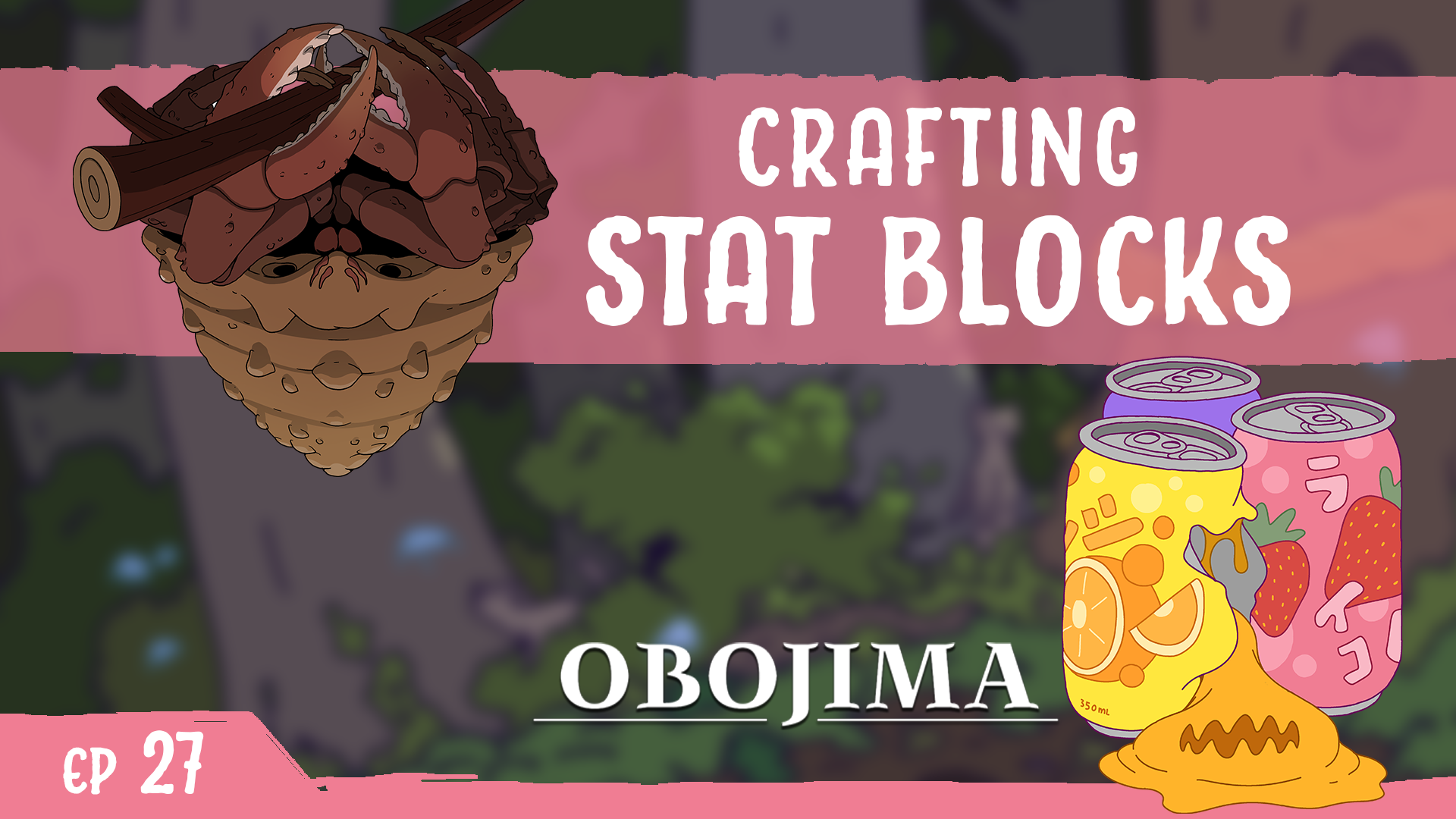
For this episode, he starts with a Tiny Ooze as the template for a new creature: the Soda Slime, a community-inspired monster that lives inside discarded soda cans.
Stat adjustments focus on:
-
Lower Strength (it’s a slime, not a wrestler)
-
Moderate Dexterity (it’s slippery)
-
Reduced Constitution compared to most oozes
-
Low Intelligence, closer to animal behavior
This approach keeps the creature’s math grounded while letting its concept shine.
BALANCING STATS, HIT POINTS, AND ARMOR
A large portion of the episode demonstrates how hit dice, Constitution modifiers, and creature size interact. Tiny creatures use smaller hit dice, and adding more dice means adjusting Constitution bonuses accordingly.
Jeremiah also points out the “give and take” of monster design:
-
More resistances and special abilities → lower stats
-
Fewer abilities → higher raw numbers
For the Soda Slime, armor class stays intentionally low, leaning into the idea that it’s easy to hit but dangerous in close quarters.
BUILDING SIGNATURE ABILITIES
Rather than relying on standard pseudopod attacks or corrosion effects, the Soda Slime gets abilities that match its theme:
False Appearance
When motionless, the Soda Slime looks exactly like an ordinary soda can, gaining advantage on initiative and requiring a high Investigation check to identify.
Sticky Nature
The slime can occupy the same space as a creature, giving disadvantage on attacks and Dexterity checks. Escaping requires a Strength (Athletics) check, reinforcing its clingy, messy nature.
Soda Pop (Death Burst)
When reduced to zero hit points, the Soda Slime explodes in a fizzy blast, forcing nearby creatures to make a Dexterity saving throw or take force damage. Finishing one off up close becomes a risky decision.
A reaction ability, Sticky Tendril, lets it trip creatures trying to move away, replacing a traditional opportunity attack with something more thematic.
The focus is always on flavor first, with final wording and balance refined later during editing.
FROM SLIME TO SHELL: THE ACORN CRAB
The second creature built during the episode is the Acorn Crab, based on the gargoyle stat block. Unlike the Soda Slime, this monster is meant to be more physically threatening and visually imposing.
Key changes include:
-
Higher Strength, Dexterity, and Constitution
-
Much lower mental stats
-
Improved armor class to reflect its hard shell
-
New movement options, including a climb speed
Rather than relying on illusion or mimicry, the Acorn Crab is designed as an ambush predator in the treetops of the Wandering Forest.
VERTICAL COMBAT AND ENVIRONMENTAL DESIGN
The Acorn Crab’s signature ability, Great Heights, allows it to drop from above and make a Slam attack as part of its movement without taking falling damage. The farther it falls, the more damage it deals.
This encourages encounters that:
-
Use vertical terrain
-
Turn forests into danger zones
-
Reward positioning and awareness
Instead of simply trading hits, players must think about where enemies are coming from, not just how hard they hit.
KEY TAKEWAYS
Monster design in Obojima focuses on:
-
Using existing stat blocks as balance anchors
-
Trading raw stats for unique abilities
-
Creating monsters that shape player behavior
-
Designing around terrain and environment
- Avoiding old movie theaters where the floors are breeding grounds for Mountain Dew monsters
CLOSING THOUGHTS
Episode 27 pulls back the curtain on how Obojima’s creatures are built: not as collections of attacks, but as little gameplay puzzles wrapped in weird ideas. From soda cans that explode when killed to acorn crabs that fall out of trees, the goal is always the same: make encounters surprising, flavorful, and fun to run at the table.
That's it for today, party monsters. We'll be back with more of those stat block rockin' beats!
Check out the full episode here:
